Victorian grassland earless dragon
Tympanocryptis pinguicolla · Western Melbourne, Victoria, Australia
IUCN estimate, 2023
A palm-sized lizard with no ear openings, feared extinct for 50 years until it was found again in 2023 on private grassland.
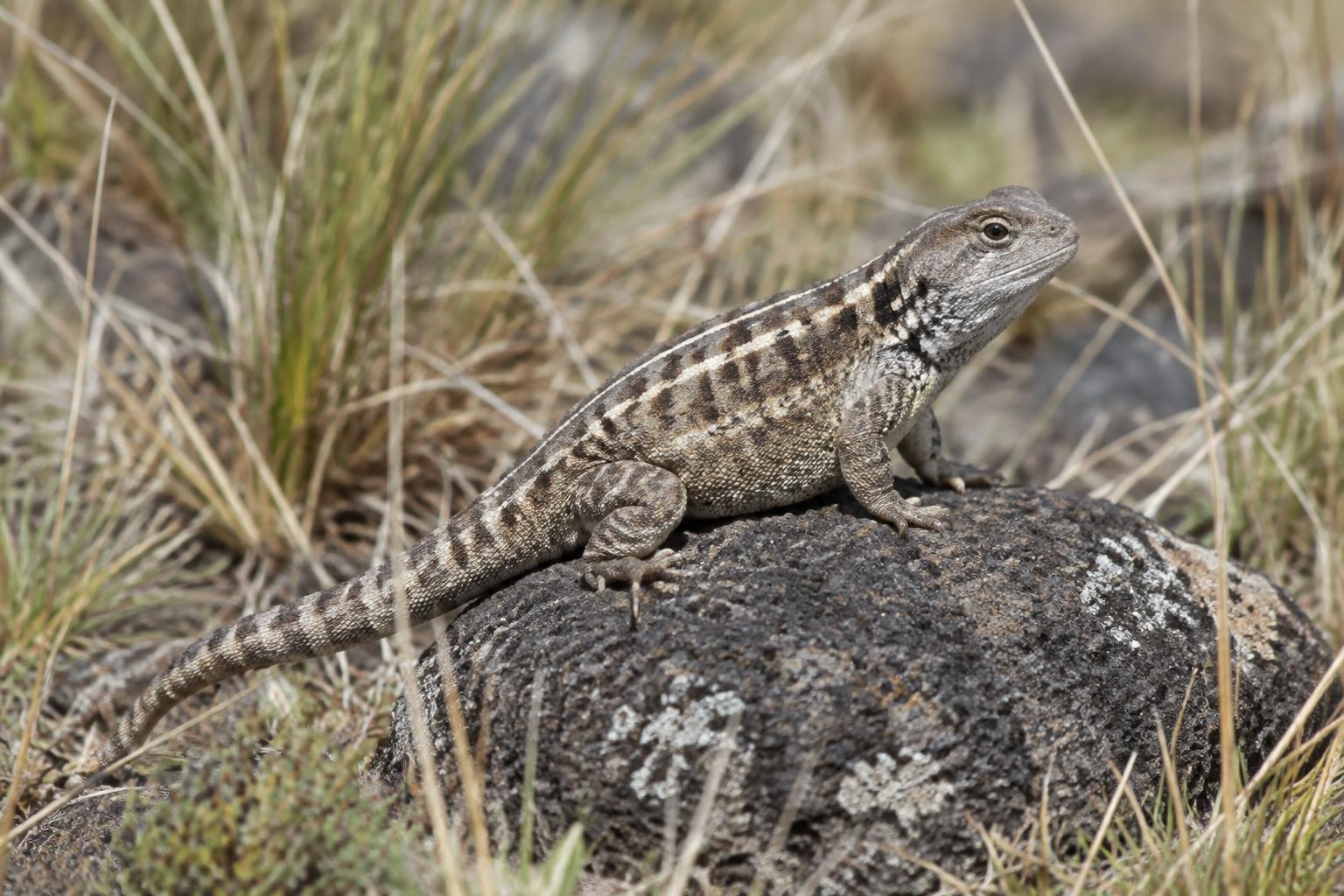 Illustrative depiction
Overview
The dragon that came back
The Victorian grassland earless dragon is a small, stocky lizard found only in Victoria, south-east Australia. As its name suggests, it lacks an external ear opening and a functional eardrum. Grey-brown with pale stripes, it is superbly camouflaged among grass tussocks and rocks.
It once lived across the native grasslands around Melbourne, but after the last confirmed sighting in 1969 it was feared to be the first reptile to go extinct on mainland Australia. In 2023 a small population was rediscovered on privately owned grassland.
Fewer than 200 are thought to remain, and the IUCN's September 2023 assessment estimates just 16–49 mature individuals. A captive breeding program at Zoos Victoria now acts as an insurance population while the remaining grassland is protected.
Why it is nearly gone
A grassland swallowed by a city
The dragon survives on a sliver of grassland at the edge of one of Australia's fastest-growing cities.
Urban development
Melbourne's suburbs are spreading across the volcanic plains where the dragon lives, and almost all of its native grassland has already gone.
Grassland degradation
Weeds, ploughing and removal of surface rocks destroy the tussocks and shelters the dragon depends on.
Predators
Foxes, cats and birds can easily pick off a tiny population living in open grassland.
Tiny, isolated population
With so few left on private land, one fire, drought or development decision could wipe them out.
Conservation history
Lost, then found
| Year | Event |
|---|---|
| 1800s | Once widespread across the basalt grasslands of western and northern Melbourne. |
| 1969 | Last confirmed sighting for more than 50 years as grasslands are cleared for farms and suburbs. |
| 2019 | Recognised as its own species; scientists warn it may be the first reptile extinction on mainland Australia. |
| 2023 | Rediscovered on privately owned grassland; a captive insurance population begins at Zoos Victoria. |
| 2023 | IUCN assessment estimates 16–49 mature individuals, Critically Endangered. |
Take action
Who's fighting for the earless dragon
Government ecologists, zoos, scientists and community groups are surveying, breeding and protecting the last dragons.
Grassland Earless Dragon Alliance
Community alliance campaigning to protect and restore earless dragon grasslands.
Victorian National Parks Association
Advocates for protecting the grasslands where the dragon survives.
Victorian Grassland Earless Dragon Recovery Program
Victorian government program surveying, protecting and recovering the dragon's remaining grassland.
Colossal Foundation
Supporting genetic sequencing and genetic rescue research for the species.
IUCN SSC Lizard & Tuatara Red List Authority
Assesses the extinction risk of the world's lizards for the IUCN Red List.
Everyday actions
What you can do from home
- 01
Leave rocks where they lie
Surface rocks in grasslands are vital shelter. Don't move or collect them.
- 02
Keep cats indoors
Pet cats hunt small lizards. Keeping them inside protects grassland wildlife.
- 03
Speak up for grasslands
Support protection of native grasslands in Melbourne's growth areas through local planning consultations.
- 04
Report sightings
If you think you've seen an earless dragon, report it to the Victorian government recovery program. Never handle it.
Selected references
- IUCN Red List — Tympanocryptis pinguicolla (last assessed September 2023)
- Robertson, P. and Evans, M., 2009. National recovery plan for the grassland earless dragon Tympanocryptis pinguicolla. Department of Territory and Municipal Services.
- Melville, J., Chaplin, K., Hutchinson, M., Sumner, J., Gruber, B., MacDonald, A.J. and Sarre, S.D., 2019. Taxonomy and conservation of grassland earless dragons: new species and an assessment of the first possible extinction of a reptile on mainland Australia. Royal Society Open Science, 6(5), p.190233.
- Jamieson, L.T., Rutter, N., Hodgens, N. and Robertson, P., 2026. Where are my dragon scats? Victorian grassland earless dragon scat persistence and detection dog-handler team search efficiency. Wildlife Research, WR26035.
- Victorian Grassland Earless Dragon Recovery Program