Seychelles sheath-tailed bat
Coleura seychellensis · Silhouette & Mahé, Seychelles
a handful of sea caves
A ten-gram coastal cave-dweller of the Seychelles, holding on at the last few roosts of its range, with no captive population to fall back on.
Source: IUCN Red List
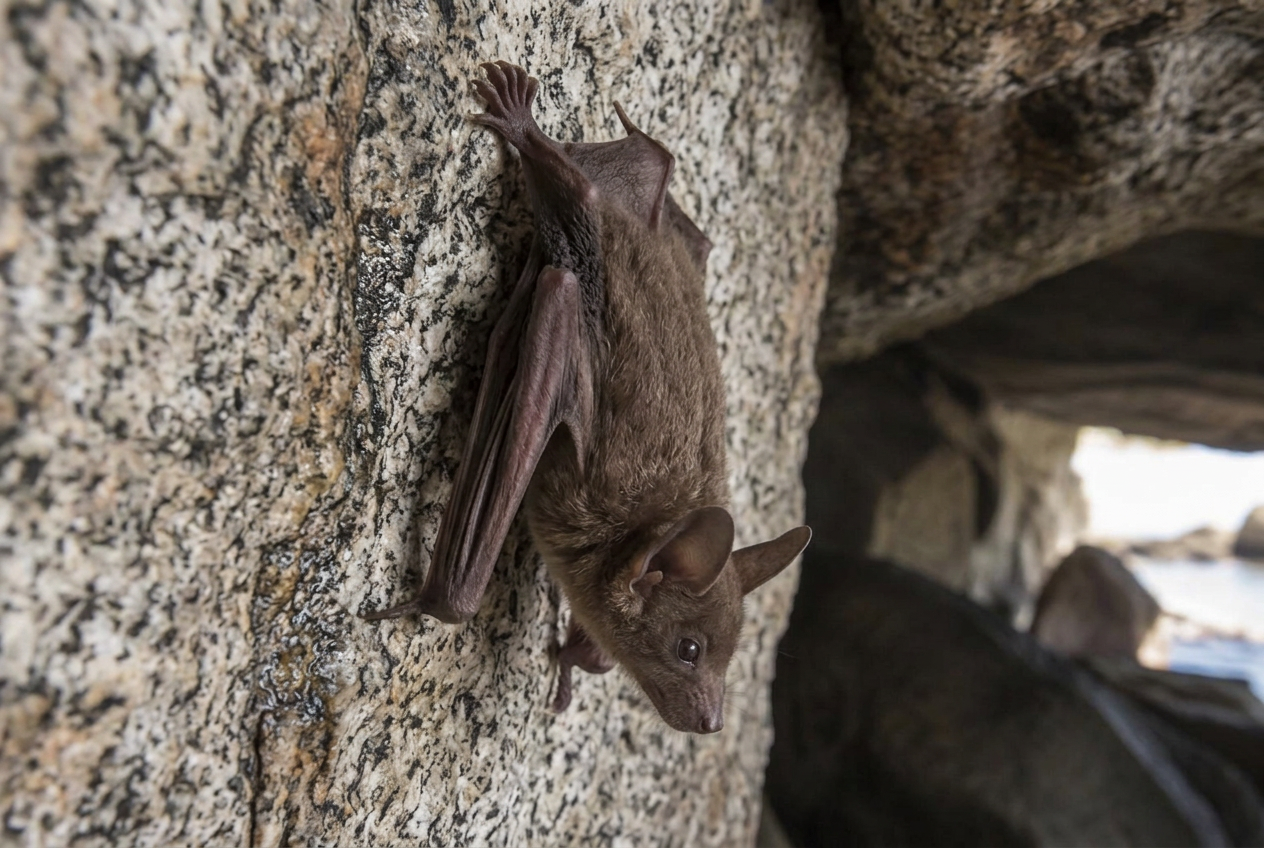 Illustrative depiction
Overview
A tiny singer of the sea caves
Known in Creole as Sousouri Bannan, this velvety bat is one of only two mammals found nowhere but the Seychelles. It is 55–65 mm long and weighs about as much as two small coins. Its name comes from a flexible sheath of membrane behind its hind legs that encloses its short tail.
By day it roosts in coastal boulder caves and rock clefts facing the sea, which need cool, stable temperatures. At night it flies out over the palm forest and swoops into clearings, marshes and coastal glades to catch insects using echolocation. In the breeding season it seems to prefer beetles.
Colonies are thought to be organised into harems. Males sing complex calls that make each one recognisable, and the songs start the breeding season from December to March. Young bats grow fast, reaching adult size in 29 days, and begin short flights outside the roost after about a month.
Why it is nearly gone
Pushed out of its caves
Human activity and changes to its fragile coastal habitat drove the decline.
Invasive coconut palms
Widespread planting of coconut palms changed the native forest and choked the open flyways, and several old roosts were abandoned.
Forest clearance and marsh drainage
Clearing forest and draining coastal marshes, where its insect prey breeds, has cut the bat's food supply.
Disturbance and pollution
Near the main La Passe roost, rubbish dumping, smoke from building sites and heavy insecticide use threaten the colony.
Invasive plants and animals
Alien plants can smother roost entrances, and growing numbers of introduced mammals prey on the bats.
Little legal protection
For over a century no law protected it, and as of 2009 no bat in the Seychelles had specific legal protection.
Conservation history
From four islands to a handful of caves
| Year | Event |
|---|---|
| 1868 | First described by Peters; found across Mahé, Silhouette, Praslin and La Digue. |
| 1909 | A single specimen recorded after decades of silence. |
| 1973–1980 | Surveys by Nicoll & Suttie find 5 roost sites across the islands. |
| 1997 | Nature Protection Trust of Seychelles begins long-term monitoring; population estimated at 14–25 bats. |
| 2003–2006 | Main roost reaches 32 bats by the end of 2003, then fluctuates; CCTV installed at La Passe in 2006. |
| 2008–2009 | Known from only 4 sites on 2 islands (Mahé and Silhouette); main roost back at 32 bats. |
Take action
Who's fighting for the Seychelles sheath-tailed bat
Research and on-the-ground roost management give this bat a future. Support them directly.
Bat Conservation International
Named this bat among the 35 species in most urgent need of protection worldwide.
IUCN SSC Bat Specialist Group
The IUCN's global network of bat experts, assessing threatened bats and guiding their conservation.
Island Conservation Society Seychelles
Restores native island habitats across the Seychelles, including removing invasive species.
Everyday actions
What you can do from home
- 01
Support invasive species removal
Clearing alien plants from cave entrances on Silhouette let bats return. Back groups restoring native palm forest and flyways.
- 02
Use fewer chemical insecticides
Insecticides wipe out the beetles and moths breeding bats depend on. Choosing organic produce reduces that pressure.
- 03
Back habitat buffer zones
Support land protection around coastal caves, so building and smoke stay away from the roosts.
- 04
Share its story
Island bats are little studied. Share this one's story and press for funding for research and roost protection.
Selected references