Saola
Pseudoryx nghetinhensis · Vietnam & Laos
IUCN SSC Saola Working Group, 2021
The Asian unicorn of the Annamites: described by science only in 1992, and never seen alive in the wild by a scientist.
Source: IUCN SSC (2021) · IUCN Red List
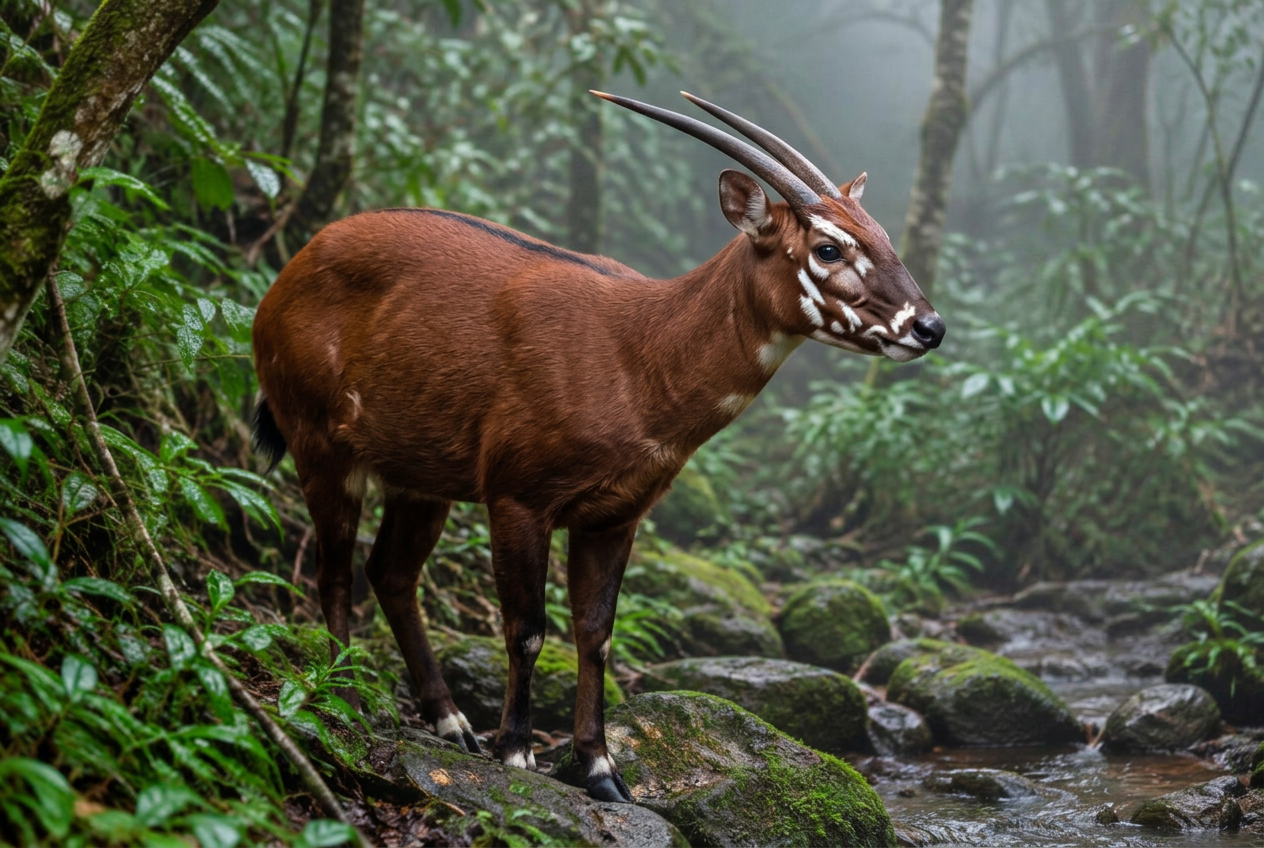 Illustrative depiction
Overview
The polite animal
A chocolate-brown wild bovid with white patches on its face and two long, parallel horns. Its Vietnamese name, sao la, means "spinning-wheel posts", after the wooden spindles its horns resemble. The Hmong people of Laos call it the "polite animal" for the quiet way it moves through the undergrowth.
It lives only in the wet evergreen forests of the Annamite Mountains on the Vietnam–Laos border, preferring river valleys. It is the only member of its genus, and split from the ancestors of cattle and buffalo around 14 million years ago.
No scientist has ever seen a living saola in the wild. Almost everything known about it comes from remains, camera traps and the knowledge of local people. Its last confirmed sighting was a camera-trap image in 2013.
Why it is nearly gone
Caught in snares set for other animals
Saola numbers have fallen for thousands of years. Modern snaring and hunting turned that slow decline into a crash.
Wire snares
Snares set for wild boar and muntjac that raid crops kill saola just as easily. They are the biggest threat.
Hunting and the wildlife trade
Saola are taken for fur, traditional medicine and meat sold in restaurants.
Habitat loss
Forest clearing breaks up the Annamite forests and cuts populations off from each other.
Genetic decline
With so few left, inbreeding and lost genetic diversity leave any survivors vulnerable to disease.
Conservation history
Discovered, and almost lost, in one lifetime
| Year | Event |
|---|---|
| ~20,000–5,000 years ago | The species splits into separate northern and southern populations as the last ice age ends |
| 1992 | Described by Western science in Vu Quang, Vietnam, long after local people knew it |
| 1993 | First photograph of a saola, taken in captivity |
| 1990s | Locals try to keep more than 20 saola alive; all die without expert care |
| 2013 | A camera trap in Vietnam records the last evidence of a living saola in the wild |
| 2015 | IUCN estimates 50–300 individuals |
| 2021 | IUCN SSC Saola Working Group estimates fewer than 100 and urges action to find them |
| Today | Possibly extinct in the wild; over 25,000 snares removed from its forests |
| 2035 | Extinction predicted without a conservation breeding programme |
Take action
Who's fighting for the saola
The best hope is to find surviving saola and start a breeding programme that mixes northern and southern genes. These groups lead the search and clear the snares.
Everyday actions
What you can do from home
- 01
Reject wildlife medicines and bushmeat
Never buy medicines, meat or skins of unknown wild origin. Demand puts snares on the forest floor.
- 02
Support snare-free livelihoods
Back programmes that give Annamite farming communities alternatives to snaring crop raiders.
- 03
Call for forest corridors
Northern and southern saola can still interbreed, but only if protected forest connects them.
- 04
Share the Asian unicorn's story
Most people have never heard of the saola. Telling its story keeps pressure on to fund the search.
Selected references