Madagascar pochard
Aythya innotata · Northern Madagascar
in the wild
The forgotten white-eyed duck, evicted from its home and clinging on in a volcanic crater.
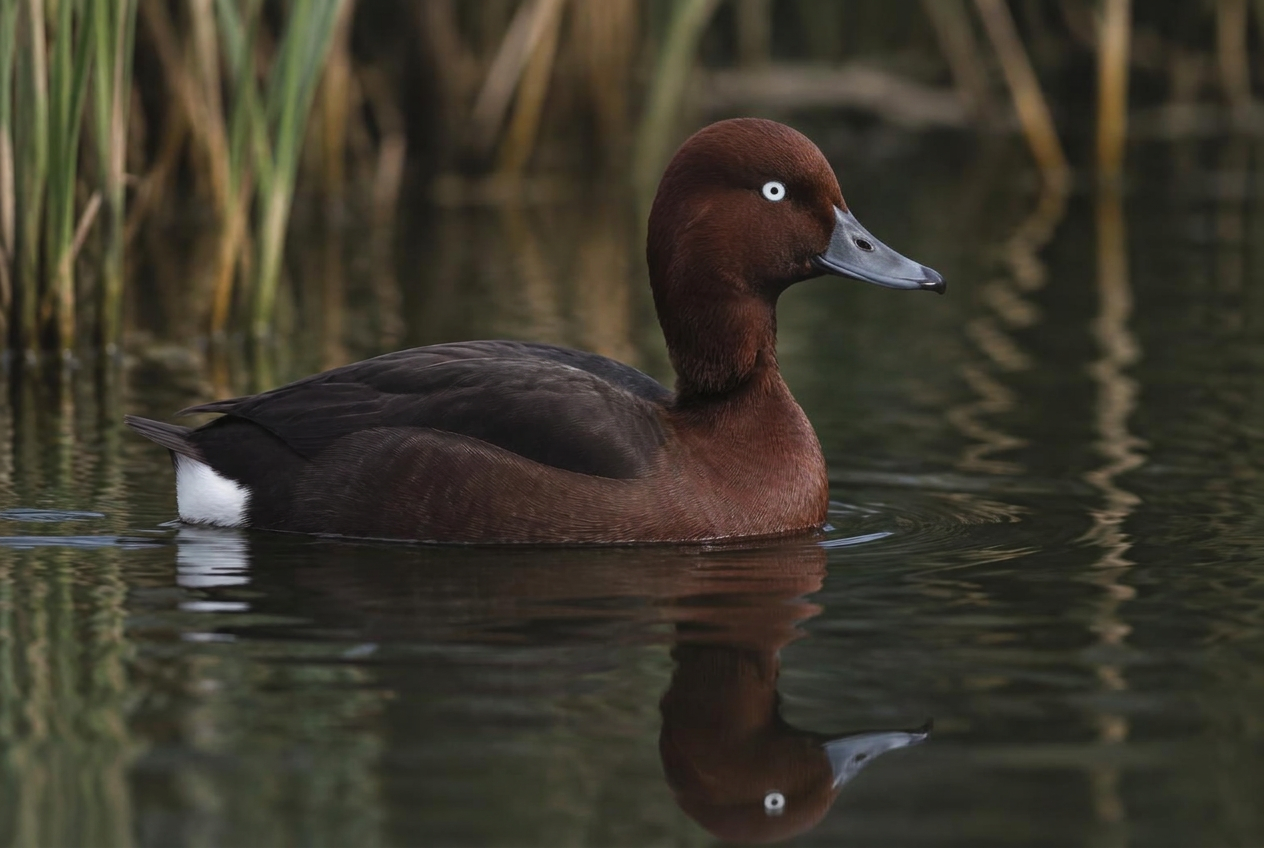 Illustrative depiction
Overview
The rarest of the “white eyes”
Known locally as the fotsimaso, the “white eye”, this diving duck belongs to the genus Aythya. Four Aythya species have strikingly pale irises; two of them, this one and Baer's pochard, are Critically Endangered. Adults are rich dark chestnut-brown, blackish on the back, with a white belly and a bright white wing bar in flight.
Described in 1894, it was barely studied before it vanished from Lake Alaotra, Madagascar's largest lake. It was presumed extinct after 1991, until 2006, when 9 adults and 4 juveniles were found on Lake Matsaborimena, a volcanic crater lake 1,600 m up in the far north.
It is a sedentary insectivore that feeds mostly on caddis fly larvae. Females lay 6–10 eggs in down-lined nests at the water's edge. In the deep, cold crater lakes ducklings struggle to dive for food, so captive breeding and releases into shallower Lake Sofia are now keeping it alive, with 30–50 mature adults in the wild.
Why it is nearly gone
Evicted from Lake Alaotra
Once fairly common, it vanished as its ancestral lake was transformed.
Wetland conversion & runoff
Through the 20th century Lake Alaotra's marshes were drained for rice paddies, while erosion silted the lake and fertilisers degraded the water.
Invasive fish
Exotic fish introduced for commercial fishing outcompeted the duck for aquatic insects and destroyed native water plants.
Bycatch, hunting & rats
Gillnets likely drowned adults and young, hunting took birds for food, and introduced rats raided nests.
An ecological trap
The surviving crater lakes are safe but too deep and food-poor: in 2011–12, 96% of ducklings starved because they could not dive deep enough to feed.
Conservation history
From “fairly common” to presumed extinct, and back
| Year | Event |
|---|---|
| Early 1900s | Common around Lake Alaotra; mistaken by early European travellers for the ferruginous duck. |
| 1991 | Last known individual captured by a fisherman at Lake Alaotra; dies in captivity. Presumed extinct. |
| 2006 | Rediscovered: 9 adults and 4 juveniles found at Lake Matsaborimena, 300 km from Lake Alaotra. |
| 2009 | Emergency rescue plan; eggs taken from the lake edge to start captive breeding. |
| 2011–2012 | Duckling mortality hits 96%. Under 2% of 57 chicks survived in 2011; 6% of 100 in 2012. |
| 2015 | Bemanevika National Protected Area established. |
| 2018 | 21 captive-bred pochards released into Lake Sofia using floating aviaries. |
| 2018–2022 | Wild population stabilises at 50–70 birds (30–50 mature adults). |
Take action
Who's fighting for the Madagascar pochard
These groups run the captive-breeding centre, design floating aviaries, monitor the crater lakes and work with lakeside communities. Give to them directly.
Durrell Wildlife Conservation Trust
Emergency rescue plan, captive-breeding centre in Antsohihy and Lake Sofia reintroduction.
Wildfowl & Wetlands Trust (WWT)
Wetland restoration, floating aviary design and global waterfowl conservation.
Everyday actions
What you can do from home
- 01
Choose sustainably farmed rice & produce
Rice and crop expansion is the biggest driver of wetland drainage in Madagascar. Support organic, bird-friendly or Fair Trade farming that prohibits wetland clearing.
- 02
Cut plastics & chemical runoff
Phosphate-free cleaning products and less single-use plastic keep toxic runoff out of downstream wetlands.
- 03
Demand forest-safe supply chains
Deforestation causes erosion and lake silting. Look for FSC-certified timber and paper.
- 04
Eat more plant-based meals
Animal agriculture diverts vast amounts of freshwater away from marshes birds depend on.
Selected references